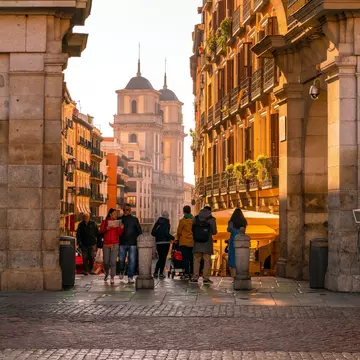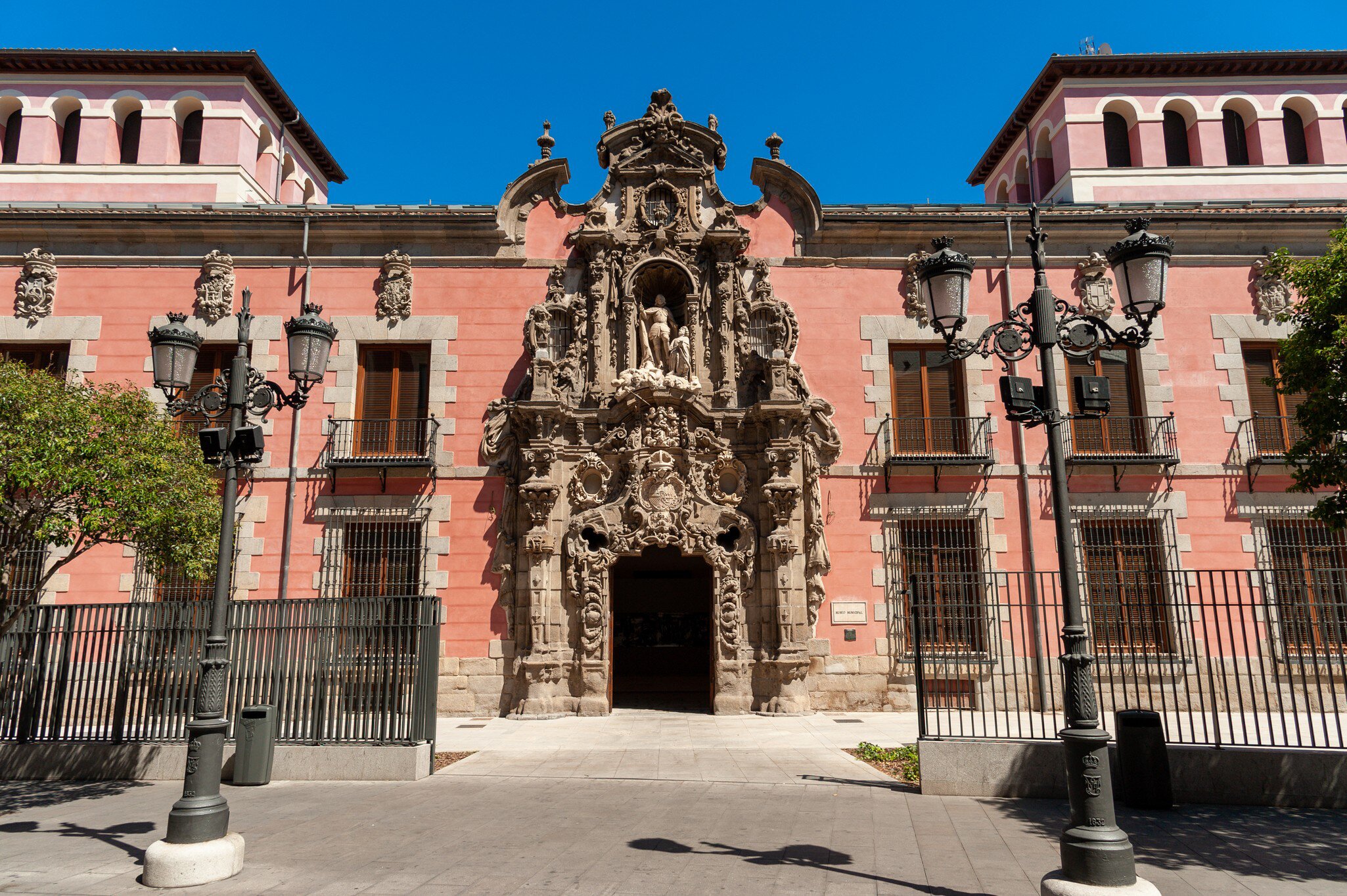
This quiet museum set back from Malasaña’s main shopping street is the best place to get to grips with the history of the city. Tracing the capital’s evolution from the time Felipe II decided to settle the court here, it covers the city’s architecture, major upheavals like the Dos de Mayo uprising and the daily lives of its ordinary citizens.
The Museum
Before entering the museum, take a moment to admire its ornate doorway. This Churrigueresque structure is the work of Pedro de Ribera and portrays the sword-wielding Fernando III "El Santo," the 13th-century king of Castilla who was canonized for expanding Catholic territory. Perched over the entrance, this militaristic figure has been greeting visitors since 1726, when the building first opened as a hospice.
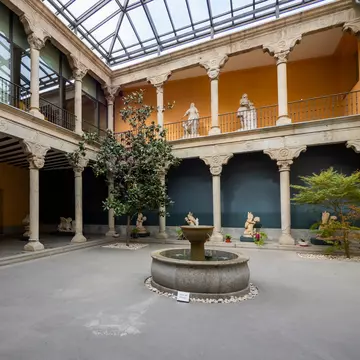
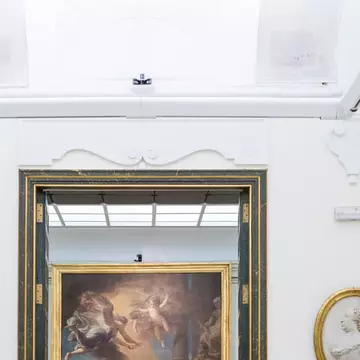
The interior of the museum has a bright, modern feel to it. It presents the story of Madrid in easily digestible bite-sized texts in rooms arranged in chronological order. This entertaining narrative begins in 1561, the year King Felipe II decided to settle the court in the city, effectively making Madrid the capital of Spain.
The Habsburgs
The ground floor is dedicated to the period of Habsburg rule that ended in 1700. Here you can see the impact the dynasty made on the city’s infrastructure. Filled with models, furniture and paintings, it offers an insight into a vanished world.
The star attraction is Pedro Teixeira’s 1656 map of Madrid, drawn up just after the city walls were expanded. Bristling with religious institutions, many of which would later disappear under Joseph Bonaparte’s brief rule, some urban features remain the same: look out for the Plaza Mayor and the grounds of Retiro, back then a royal palace.
Also of interest are Juan de la Corte's depictions of festivities in the Plaza Mayor, in which men on horseback flow across the square, and Louis Meunier's prints of 17th-century Madrid, where you can still see the alcázar, an ancient building that was lost after the Bourbons took over in the 1700s.
The Bourbons
Upstairs on the 1st floor, you can find out all about the facelift Carlos III gave the city, famously creating the elegant Paseo del Prado. Part of this display includes Ventura Rodríguez's sketches for Fuente de Cibeles, a fountain that's still one of Madrid’s most iconic sights.
The real drama kicks off in the section dedicated to the French invasion of Spain and the Dos de Mayo uprising. The complex story is well sketched out in informative panels detailing how Napoleon took advantage of a power vacuum when Fernando VII tried to wrest the crown from his father. The war drove Goya a bit loopy; for an insight into why, check out the panel about his seemingly innocuous painting, Allegory of the City of Madrid.
The Modern Era
The final floor is a treasure trove of early photographs of the city, prints and traditional clothing. Not to be missed are some smashing romantic paintings by Joaquín Sorolla and Francisco Pradilla. There’s also some great social commentary on how the Industrial Revolution affected the city. And if you don’t have time for this floor, you can always come again, as this amazing museum is completely free.